So, it appears after all that the police force of a private entity is not an arm of the state. I mis-read the Texas Supreme Court’s 2017 decision. I wrote about that 2017 decision here. The Texas Supreme Court has now resolved the issue in University of the Incarnate Word v. Redus, No. 18-0351 (Tex. 5/22/20202), and found that UIW’s small police force is not entitled to sovereign immunity. The Super Court found there were some factors which suggest the small police force compared to other police force. But, in the end, the court noted that its small police force is governed by the UIW Board of Trustees. It is not accountable to the taxpayers or to any state official.

This matter has been on appeal since 2016. See the most recent decision here. It was a silly argument. Yet, it took years to resolve. The 2017 decision suggested that since charter schools have been found to be an arm of the state,  perhaps the UIW police force should also be considered an arm of the state. That such a flimsy argument was considered reflects on the very conservative nature of the Texas Supreme Court.
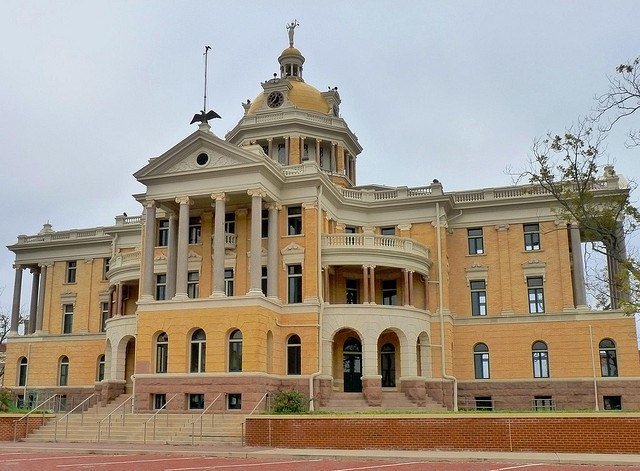
I wrote a post the other day stating that mere fear of contracting the COVID19 virus is not a disability for purposes of the Americans with Disabilities Act. See that post here. But, in a similar lawsuit concerning mail-in balloting, the Western District of Texas has found that anxiety over the coronavirus does indeed amount to a disability for purposes of voting. See that decision here in the case of Texas Democratic Party v. Abbott, No. 20-CA-438 (W.D.Tex. 5/19/2020).  The court noted that in the past few years, the Texas Attorney General Ken Paxton has authored contradictory AG opinions regarding voting. He issued an opinion in 2015 saying that no particular definition of disability is required for mail-in voting. In 2017, he issued an AG opinion stating that sexual deviancy qualified as disabled under the Texas Election Code. These decisions contrast to the same AG now claiming fear of infection does not qualify as a disability. The court rightly noted the apparent hypocrisy in AG Paxton’s positions.

The court also noted the lack of voter fraud in Texas. And, the court noted that under the Texas Election Code, persons over the age of 65 can vote by mail regardless of disability. If vote by mail has so much fraud, why is that possible?

The Texas Election Code defines “disability” as a physical condition that prevents a voter from appearing at a polling place without a likelihood of injuring the voter’s health. This definition is more broad than the definition found in the ADA. The ADA definition focuses on how an impairment affects a person’s major life activities. The court points to the documented stress and anxiety currently among the U.S. population due to the coronavirus. The court then finds that fear and anxiety are intertwined with the health of voters. The lack of immunity is a physical condition, says the court. The court then grants a temporary restraining order allowing voters, Democratic and Republican, to cite the coronavirus and fear as basis for voting by mail.

Judge Biery’s decision is not scholarly. He points to no precedent for his ruling. There probably is no precedent. The decision will surely be appealed. Fear of infection has been held in federal courts as not a disability under the ADA. The Texas Election Code definition of disability is broader. But, I am doubtful that lack of immunity will be held to constitute a “physical condition.” Although, as a matter of policy, it ought to be. We should institute policies that encourage voting, not discourage it. But, it is true that the current AG has taken contradictory positions in the past.

In a very brief order on May 20, the Fifth Circuit issued a stay stopping Judge Biery’s decision. See that decision here. The stay does not overrule the lower court’s decision.

Be Safe.

So, a friend called me. She is a lawyer in small town Louisiana. She has been working a few years for a Public Defender’s office in a parish seat. She has been working from home, but now they want her back by next Monday. My friend has been diagnosed with Diabetes Type II. She also suffers from asthma. Does she have to return to work, she asks me. She mentions that the state of Louisiana offered to install plexiglass shields in courtrooms, but the judges in her parish declined the offer. Several of the judges are up for election in the Fall and they fear voter backlash If they spend money on something deemed non-essential by the voters. The state would pay for the shields. But, the judges still fear a negative reaction from the voters.

Oh, and by the way, the parish jail has many cases of the COVID19 virus. Jail inmates appear in court everyday. This is the new reality. COVID19 is never far from most work places. Unfortunately, my friend, like many workers, suffers from various ailments which make the virus very serious. She is in the Public Defender’s office. But, the District attorney’s office is even worse. In an office with perhaps ten lawyers, two have suffered from heart disease and two have survived cancer. And, that is just the lawyers.

I had to tell my friend that at least per federal statutes, there is no protection for workers who fear possible infection. She would probably be entitled to some accommodation, if she was infected herself. But, in regard to possible infection, there is unfortunately no protection, yet.

The AFL-CIO labor union filed suit in the District of Columbia court of appeals against OSHA asking OSHA to issue guidance protecting workers. See Axios report here. According to the report, OSHA has received 3,800 complaints from workers, but has yet to issue any citations to employers. OSHA has guidelines now for the virus, but those are only guidelines. The AFL-CIO is seeking actual requirements to protect workers.

Be Safe.

Pres. Trump  fired the IG for the State Department late Friday. He is required by statute to explain why. But, his letter to Congress simply said he lost confidence in Steve Linick. Yes, the old “lost confidence” rationale. The refuge of all retaliating employers. Later, when asked about the termination, Pres. Trump minimized one of the complaints the IG’s office was investigating, that Secretary of State Pompeo was using government workers to walk Sec’y Pompeo’s dog and wash his dishes. Indeed, Mr. Pompeo’s security personnel have been joking they are “Uber Eats” with guns, because they have been sent out for take-out so often.

The President said Sec’y Pompeo “might” have been on important phone calls with world leaders when he asked government workers to wash his dishes. …. Perhaps, but wouldn’t the dishes have waited until he found world peace? It violates various regulations and statutes to call on public servants to perform personal tasks. The President is wrong on several levels.

But, more importantly, his answer suggests Sec’y Pompeo was seeking reprisal against Mr. Linick. The President even said someone needs to deal with this “whole whistle blower racket.” See Politico news report. And, the President was only too willing to deal with it.

The American Bar Association periodically publishes brief papers on topics of popular interest. They call the papers “Fact Check” papers. The ABA has published a Fact Check paper on whether and to what extent an employee can refuse to work at unsafe work places. See that paper here. The paper points to the general requirement imposed by OSHA that work places be protected from “recognized hazards” that can cause death or serious injury.

New OSHA guidelines also require employers to keep employees six feet apart when possible, take temperatures, disinfect surfaces and to provide face masks. The paper notes that already, several thousand complaints have been filed with OSHA regarding employers not following these guidelines.

But, the paper finds only limited support for workers who are simply afraid to return to work. The paper points to the decision in Bragdon v. Abbott, in which the U.S. Supreme Court found that an asymptomatic HIV person did have a disability for purposes of the Americans with Disabilities Act. The problem, the paper notes, is how to address persons with no COVID19 diagnosis, but who are simply afraid to go to work. There is little relief for such folks. There is no legal requirement that employers address fears which do not involve a disability. In 2019, the Eleventh Circuit found that the ADA only applies to persons who already have a diagnosis, not healthy persons who sometime in the future might experience a disability later. EEOC v STME, LLC, No. 18-1121 (11th Cir. 9/12/2019). That case involved an employee who refused to fly to Ghana during the Eboloa epidemic.

As the paper notes,  looking at state law, employment at will means an employer can fire a person for any non-discriminatory reason. Fear of possible infection is not protected by any law in Texas, unfortunately.

Be Safe.

The Office of Special Counsel has found in favor of Dr. Bright. I previously wrote about Dr. Bright here. The quickness of the finding underscores the strength of Dr. Bright’s case. I have yet to get the OSC to even conduct an actual investigation in any of my cases. OSC has recommended that Dr. Bright be reinstated to his job as head of Biomedical Advanced Research and Development Authority. He previously held that position for ten years. One would think at a time like this, we would hang onto persons with that sort of experience.

Dr. Bright has spoken in an interview for CBS News. He said his persistent warnings about the coming pandemic lead to a breaking point with his supervisors. That breaking point was his view of hydroxychloroquine. He expressed frustration with the lack of leadership at the White House. See CBS news report.

So, as I guessed, Dr. Bright is claiming to be a whistleblower. I previously wrote about Dr. Bright here. Dr. Bright submitted a whistleblower complaint with attachments. See NPR news report here. He filed his complaint with the Office of Special Counsel. OSC has the power to investigate whistleblower complaints submitted by federal employees. He accuses his boss and Asst. Secretary of DHHS, Dr. Robert Kadlec, and the Secretary of DHHS, Alex Azar, of showing lack of ignoring Dr. Bright’s concerns about shortages of medical equipment.

In the complaint, Dr. Bright says he raised concerns early on about the lack of preparation by our federal government for the coronavirus. Then, later the administration, Pres. Trump, in particular began pushing hydroxychloroquine as a treatment option. Dr. Bright resisted that push. He alleges n his complaint that he was demoted due to his resistance. In looking at his complaint, he is also alleging fraud, waste and abuse of government funds. See the NPR website for a pdf of his OSC complaint.

Either complaint, the whistleblower complaint or the allegation of fraud, waste and abuse could be strong claims. In his last performance evaluation, Dr. Bright received a good rating with no criticism. DHHS’ claim that Dr. Bright was a problem employee will hold little water. DHHS also transferred Dr. Bright to his new job at the National Institute of Health with no warning. Indeed, Dr. Bright learned of the transfer from the media. He tried to call his boss, Dr. Kadlec, about the transfer, but the Assistant Secretary would not return his calls. Whenever the employer fails to follow its own procedures in carrying out a termination only helps show reprisal.

Whistleblowers receive extensive protections. Alleging abuse of federal funds constitutes a violation of the False Claims Act. That is a relatively new sort of claim. The OSC has the power to conduct a thorough investigation. It will be interesting to see if they do so here.

Dr. Bright claims his new job is “less impactful.” It appears he did not suffer a loss in pay. Normally, most lawyers would not accept a case with no lost pay. But, if he can show some direct impact on his career, that will help.

And, of course, alleging high profile violations represents a high stakes type of lawsuit.

Coronavirus FAQ:

My job expects me back to work next week. My spouse has an underlying condition and I am afraid I might bring the virus home to him. Do I have to go back to work?

If the underlying condition is serious enough that it rises to the level of a disability, then you are afforded some protection. Your employer cannot discriminate against you because you have a spouse with a disability. But, as far as not going back to work, I know of no law that would protect you if you refused to go back to work. OSHA requires employers in general to provide a safe work place in regard to known dangers. If someone at work tests positive for coronavirus, then the employer probably must provide some protection. But, if no one has tested positive at work, there may no law that requires the employer to offer any protection.

I was self-employed with my own business. Is there any way I can get unemployment benefits?

Yes, the CARE Act passed into law in March specifically added self-employed workers and independent contractors to the list of persons who qualify for unemployment benefits. See the TWC website here for more information.

I am receiving unemployment benefits. My boss wants me to come back to work. But, I am getting more in unemployment than I would if I went back to work. Can I refuse to go back and still keep getting my unemployment?

The CARES Act passed into law mid-March required states to waive the requirement that persons who receive benefits must look for work. Effective April 28, TWC said that any person who refuses to return to work will be ineligible to receive benefits. But, effective April 30, TWC loosened that restriction. Now, a person can turn down a call back to return to work and still receive unemployment if they fit one of these categories:

  • The person receiving benefits is in the high risk category – aged 65 and older
  • Someone in the home is aged 65 or older
  • The person receiving benefits has been diagnosed with COVID19
  • Someone in the home has been diagnosed with COVID19
  • The person receiving benefits has been told to do a 14 day quarantine due to exposure to someone who tested positive
  • Child care issues

See TWC website for more information. TWC adds that each case will receive individual review for specific situations.

My job wants me to come back to work, but I have two kids at home. They are not in school. Can I stay home to care for my kids until we can get child care?

Yes. The Families First Coronavirus Response Act passed into law in March provides that persons with kids at home because the schools are closed are entitled to up to 12 weeks of partially paid leave. This provision is in effect through Dec. 31, 2020. See TELA website here for more information.

I have to stay home for self-quarantine because a co-worker tested positive for the coronavirus. Is there any way I can get paid for that time?

Yes, under the Families First Coronavirus Response Act passed into law in March, a worker is entitled to 10 days of partially paid sick leave if s/he has to quarantine. See TELA website here for more information.


We are in the middle of a pandemic. Obviously. How will that work in closely confined spaces? Not well. Tyson Foods published a warning this last weekend, stating the nation’s food supply was at risk due to infections. The Trump Administration responded within days by issuing an order under the Defense Production Act that all meat plants remain open. Ok, that’s nice. But, if the workers call in sick, then what? Some workers have already indicated they are afraid to return to work unless Tyson institutes some protections. Many workers have already tested positive for the COVID-19. See CNN news report.

It is ironic that the ICE conducted major raids on meat packing plants last Summer apprehending hundreds of undocumented workers.

One of the challenges with the coronavirus is what protections can the worker ask for in response to a general fear of the virus? The Tyson workers have a more specific concern, because many workers have actually tested positive. A couple dozen workers have died. But, absent actual tests, what can a worker ask for? Not much. OSHA requires employers to provide a safe working environment in regard to known dangers. But, if no one has tested positive, it will be hard to argue in court that the virus presents a known danger in the work place.

The Tyson situation is different. The worker can and should demand some level of protection. The question will be how much protection can they expect OSHA to enforce? On Sunday, the Center for Disease Control and OSHA issued guidelines for meat packing plants to protect workers. See those CDC guidelines here. But, the guidelines are just that, guidelines. Tyson Foods can honor those guidelines, or not. Workers can make demands, but they can then be terminated. And, the larger question is do we want COVID-19 in our food supply? I think most consumers would prefer sick workers and possibly sick workers not come to work. No one wants to buy bacon that was packed at an infected plant.

One worker asks what will the administration do if no one comes to work? Surely, the administration will get them protective gear or whatever they need. If not, as I have advised other workers when the law does not help,  form a union. Unions started at a time when employers were not responsive to safety concerns. We may be re-visiting that time, soon.

Be Safe.

Pres. Trump brought some unusual experience to the office of the President of the United States. He filed over 3,500 lawsuits during his career in business. That is an astounding number. Periodically, I look for prior lawsuits regarding different organizations. I am sure I have never seen more than ten lawsuits for any one organization, whether that organization was a government agency or a business. James D. Zinn’s has written a book about Pres. Trump and his lawsuits, titled Plaintiff in Chief: A Portrait of Donald Trump in 3,500 Lawsuits.

As the author explains in his book, Donald Trump sued for myriad reasons. He filed suits for business advantage, for sport, to achieve control, at the drop of a hat, and to destroy or silence his opponents.  Pres. Trump displayed little respect for the law in his lawsuits, says the author. He scorned the law and the legal process.

James Zinn knew Roy Cohn, a mentor to Donald Trump. Mr. Zinn characterizes Mr. Cohn as an unscrupulous lawyer. Cohn was disbarred in 1986. Mr. Cohn taught Trump how to weaponize the law.

Mr. Zinn discussed one example of Trump’s litigation tactics. In 1983, he was sued because he hired undocumented Polish workers for Trump Tower. Mr. Trump did not contribute to the union pension fund for the Polish workers, as he was required to do. The case eventually settled for 100 cents on the dollar after protracted litigation and after a trial in which the judge said Mr. Trump’s testimony was completely lacking in credibility. The settlement was sealed, another common Trump tactic. Twenty years later, the settlement was unsealed. See ABA Bar Journal report here.

It is quite rare to seal a settlement. It is just as rare for a judge to comment publicly on the credibility of a witness. And, have to add, I am sure that as a lawyer in my third decade of practicing law, I have not participated in 3,500 lawsuits, or 2,500.

Be Safe.