The crime fraud exception to the attorney-client privilege was instituted in reaction to the Watergate scandal of the 1970’s. Observers at the time were shocked how many attorneys were involved in the Watergate mess. It was also surprising at the time how often illegal plans were funneled through lawyers, simply because it was presumed the plans could not be pried away from the lawyers. So, now if a crime or fraud is involved, investigators may indeed inquire into matters discussed between attorney and client.

Donald Trump is a prime example. According to the notes made by his lawyer, Evan Corcoran, Mr. Trump suggested Corcoran lie to investigators about his boxes of classified documents. Mr. Trump also suggested Mr. Corcoran hide or destroy subpoenaed documents. Most lawyers prefer to keep their law licenses. We can expect that Mr. Corcoran was concerned about Trump’s suggestions.

According to the indictment recently made public, Attorney I (now believed to be Mr. Corcoran) recorded these notes after his meeting with Mr. Trump:

Mr. Trump said:

  • I don’t want anybody looking, I don’t want anybody looking through my boxes, I really don’t, I don’t want you looking through my boxes.” 
  • “Well what if we, what happens if we just don’t respond at all or don’t play ball with them [DOJ]?” 
  • “Wouldn’t it be better if we just told them we don’t have anything here?” 
  • “Well look isn’t it better if there are no documents?” 
  • “[A lawyer for former Secretary of State Hillary Clinton] did a great job. … He was the one who deleted all of her emails, the 30,000 emails, because they basically dealt with her scheduling and her going to the gym and her having beauty appointments. And he was great. And he, so she didn’t get in any trouble because he said that he was the one who deleted them.”

Plucking Motion

In response to the subpoena, Attorney I located 38 classified documents. He put them in a folder and sealed with them with clear tape. Mr. Trump and Mr. Corcoran then discussed whether Corcoran should take them and lock them in a safe at his hotel. Mr. Trump then told Corcoran that if there was anything bad in there, then he should … and Trump then made a plucking motion with his hands.

Yes, these statements fall well within the crime-fraud exception to the attorney-client privilege. This testimony will very likely be admitted in court. The burden then falls on Mr. Trump to somehow justify these statements. Good luck. See ABA Bar Journal report here.

A little known fact is that many defense lawyers who practice employment law are actually political moderates. Many of my defense lawyer friends actually were appalled by former Pres. Trump. But, not all. Two lawyers resigned from the mega firm, Lewis Brisbois Bisgaard & Smith in Los Angeles to start a new law firm that “reflects our values.” What were those values? Well, poking fun at Jews was one. Making anti-female and racist comments were two others. The two partners were the Chair and Vice-Chair of the Labor & Employment section at Lewis Brisbois.

John Barber and Jeff Ranen were also members of the management committee for the 1600 lawyer firm. That means they helped run the firm. Dozens of emails were provided by Lewis Brisbois to Above the Law and the Forward blogs detailing their many prejudices. For example, in 2012, Raven emailed to Barber that the firm does not hire Jews. In another email, Raven boasted to Barber that in one of his cases, the opposing lawyer was an observant Jew. The Jewish lawyer had asked Ranen to not send him any deposition related material on Saturdays. So, boasted Ranen, he always emailed the observant Jew on Saturdays. Ranen added, “I almost ONLY write to him on Saturday mornings.” Barber responded, “Jew hater.”

So, when lawyers make a special request, like “please do not send me any materials on Saturdays,” the great majority of us honor those requests. Litigation is by definition adversarial. It is exceedingly easy for the process to devolve into name-calling and spitefulness. We honor those requests because: 1) the opposition can use it against us when we do not, and 2) the opposition will do it to us, as well.

The two senior partners also made frequent comments about the breast size of female lawyers at their firm and about female judges. They used the n-word and made frequent anti-homosexual comments. Since Lewis Brisbois released these emails, the two men resigned from their newly created law firm. Lewis Brisbois located the emails after a formal complaint was submitted about the two men. The actions of the mega-firm suggest they are trying to make amends. Let’s hope they do. See Above the Law post here and the Forward post here.

We are all intrigued by the possibilities of Artificial Intelligence. But, what happens when AI goes crazy? One lawyer in New York City will soon find out. The lawyer who represents the plaintiff in Roberto Mata v. Avianca, Inc, Steve A, Schwartz, a lawyer with 30 years experience, submitted a brief that was partly generated by AI. A second lawyer, Peter LoDuca also signed the brief, but apparently did not contribute to it.

The opposing lawyer knew that area of law well. He recognized early on that Schwartz’ court cases did not exist. In fact, the opposing lawyer found six of the cited court decisions did not exist. Federal Judge Castel asked Schwartz to submit an affidavit explaining how he came up with his brief. In that affidavit, Mr. Schwartz admitted that six cited decisions did not exist. He said he relied on ChatGPT to create the brief. The brief included made-up quotes from the non-existent cases. Schwartz said he asked ChatGPT if the cases were real. ChatGPT assured him they were. ChatGPT said the decisions could be found in “reputable databases, such as LexisNexis and Westlaw.” ChatGPT was not correct.

Judge Castel has set a hearing for June 8 for Mr. Schwartz to show cause why he should not be sanctioned. See ABA Bar Journal report here.
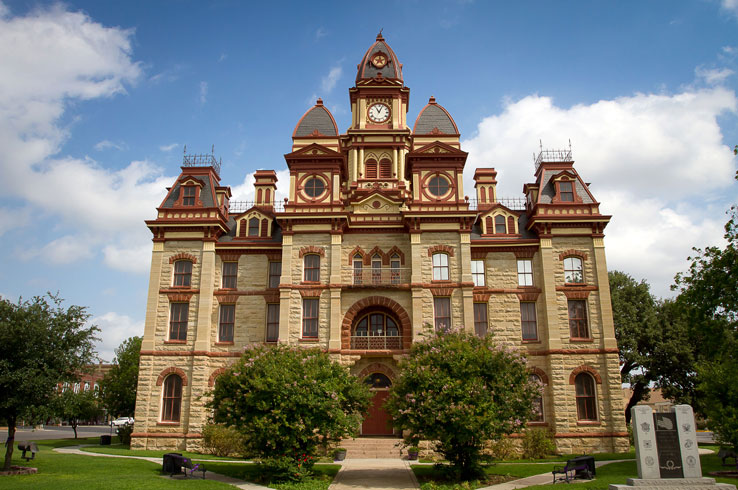
I have written about AG Ken Paxton’s transgressions many times, especially about the whistle blower lawsuit against him. See my prior posts here and here. Well, now the Texas House has impeached the Texas Attorney General. By a vote of 121-23, he state legislators voted to remove him from office. He is suspended from his office by this vote. See Texas Tribune for more information here.

To mark Memorial Day, let us recall two area San Antonio heroes. They were both friends of mine. They both died in war zones back in 2005 and 2006 when I was deployed myself.

SSGT Clinton Newman was a fine soldier. He was a bright young man in the 321st Civil Affairs Brigade during my brief time with the 321st here in San Antonio. One of the nice things about being in your hometown unit is that I actually ran into a member of my unit at a movie. I ran into SSGT Newman when he was at a movie with his girl and I was with mine. He was one of the few 321st soldiers still here back in late 2003 and early 2004, while most of the unit was deployed. See a biographical sketch to learn more about someone who would have been a fine citizen of San Antonio and was already an excellent soldier.

I served with Albert E. Smart way back in the 2/141 Infantry Battalion in Corpus Christi. We were young company commanders together. Albert was gung-ho and always smiling. Years later, I was quite surprised to see him in the 321st CA Brigade here in San Antonio. He deployed in 2005 and passed away in Kuwait on the way to Afghanistan. It was such a shock that someone so young, in such good physical shape would pass away from an illness. I think Heaven is in much better physical shape now that Albert is there. And, I expect there are a great many more smiles among its citizens. See a memorial here to learn more about my buddy, Albert.

Gov. Ron DeSantis has seen fit to attack Mickey Moue and Disney World. He then found a way to revoke their unusual status of essentially operating their own county government over a wide swath of Florida land. Disney World responded by filing a lawsuit accusing Gov. DeSantis of violating free speech rights for a corporation. Yes, corporations, like persons have free speech protections.

So, what is the legal basis for Disney World’s lawsuit? Disney alleges five different causes of action:

  • Desantis’ new oversight board violates the two contracts Disney signed decades ago. That means the state government violated the contracts clause without an “important governmental interest.”
  • Abrogating the two contracts from decades ago amounts to a “taking” in violation of the Fifth Amendment to the U.S. Constitution.
  • That same abrogation violated the 14th Amendment to the U.S. Constitution, because the taking was “arbitrary and irrational.”
  • The new oversight board amounts to “retaliatory interference” with Disney’s decades old agreements and, therefore, chills Disney’s First Amendment rights.
  • Changes in the oversight board constitute another violation of Disney’s 1st Amendment rights.

There is no doubt Gov. DeSantis took this actions in response to Disney’s opposition to his so-called “Don’t Say Gay” bill. The hardest part of most free speech lawsuits is essentially already shown. It will be interesting to see how the Florida government defends itself in this suit. See ABA Bar Journal report here for more information.

Lawyers do not like to be deposed in a civil suit. So, when Baker Hostetler partner Lee H. Rosebush was deposed, he provided evasive answers. Or, as Special Master, retired Judge Dennis Cavanaugh said, ” he spoke words, but did not provide answers.” Mr. Rosebush sits on the board of Alliance Medical Holdings. Alliance Medical was sued by Roche Diagnostics Corp., because it allegedly billed insurers for more expensive strips, instead of the less expensive mail-order strips it had actually purchased.

Mr. Rosebush was deposed for seven hours, which means his deposition lasted most of the work day. The Special Master responded to simple, yes or no questions, with frequent objections such as “asked and answered.” He asked the court reporter to read back a previous answer, instead of providing an actual answer. The Special Master said that Rosebush continually provide a rote answer or answered a question that had not been asked.

Later, when responding to the motion to compel, Rosebush claimed he was harassed with repetitive questions. (Well, all seven hour depositions involve some degree of repetition. Hello!).

The Master issued an order that Rosebush sit for a second deposition and provide responsive and concise answers. Judge Cavanaugh said he would make himself available for phone calls during the second deposition regarding any evasive answers. See ABA Bar Journal report here.
And, that is how a big firm partner puts his law license art risk.

An issue that has percolated for many years is whether an employer must offer a transfer to an open position as an accommodation to a person with a disability. Adrianna Cook worked for the Methodist Hospital for several years when she injured her back in 2012. She then worked in a light duty position for several months at the Methodist. Ms. Cook went out on FMLA leave for a few months. While out on FMLA leave, she asked her boss for accommodation in performing her duties several times. Eventually her boss talked to HR and told Ms. Cook she should seek other jobs. Cook applied for a vacant position in another part of the Methodist, but she was not selected.

The Methodist offered Plaintiff six months of unpaid leave. HR told her she could accept the leave. If she did not accept it, she would be considered to have abandoned her job. In the meantime, if her position was filled, she would have to find another position with the hospital. Cook did not wish to go that route, since she believed she could work in a clerical position. She did not respond to the hospital’s letter. The Methodist then terminated her.

Most-Qualified Policy

Ms. Cook filed suit. The Methodist filed a motion for summary judgment, saying it had a “most qualified” policy” and that policy was not discriminatory. The district court granted the motion.

On appeal the Fifth Circuit looked at the decision in U.S. Airways, Inc. v. Barnett, 535 U.S. 391 (2002). In that decision, the Supreme Court held that in some circumstances, an employer is required to allow reassignment to a vacant position as an accommodation. But, the Supreme Court added that this requirement does not apply when an employer has a legitimate seniority system. If an employer could show valid undue hardship, the employer need not be required to allow reassignment.

The Fifth Circuit made quick work of the EEOC’s argument. It found that the request for reassignment would conflict with an employer’s most-qualified policy. The appellate court noted the split in the circuits on this issue. But, it found that to find otherwise would “impose substantial costs” on the employer. It would cast to the side the reasonable expectations of the other employees.

See the decision in EEOC v. Methodist Hospitals, No. 17-10539, 2023 WL 2553910 (5th Cir. 3/17/2023) here. The court’s ruling really has little meaning. It suggests the “most qualified policy” has some meaning at the hospital. But, really, every employer would claim to have such a policy. As such, every employer will have a right to reject a reassignment request. Comparing the most qualified policy to a seniority system is a false comparison.

Even so, the appellate court vacated summary judgment on this issue. It found that the lower court should also assess whether there might be “special circumstances” that might in this one instance justify disregarding the most qualified policy.

Failure to Accommodate

The decision addressed another issue that occurs in many situations. After her injury, Ms. Cook tried to engage in the interactive process to arrive at an accommodation. She requested and was granted FMLA leave five times. The Hospital assigned her to light duty work for a period of time. At some point, Methodist HR told Ms. Cook that there was nothing more they could do for her and she should resign. Ms. Cook believed this meant the employer was terminating any discussion about additional accommodations. Certainly, to most of us, that sounds like the end of the discussion.

But, the Fifth Circuit said no. The court agreed the employer should not have said that. But the court noted that the hospital continued to offer Ms. Cook additional personal leave as an accommodation. The court said there was no indication that the statement was a “final and unreviewable” decision regarding Ms. Cook’s disability. Now, the higher court is engaging in fact-finding. A jury should make this determination.

The court said that Ms. Cook continued to send medical updates to the hospital and she continued to apply for vacant positions. Sure, but none of those applications resulted in an actual job offer. The Fifth Circuit’s statement reflects a lack of experience in the real world. Most of us would agree that when HR tells you after months pf discussion they will not offer anything more, that such a statement is as final as it gets. In any even, whether that statement reflects a final offer of accommodation ought to be determined by a jury, not by a judge. It is a question of fact.

Stony Silence

The court relies on a prior decision, Loulseged v. Akko Noble, Inc., 178 F.3d 731, 738 (5th Cir. 1999 (for its conclusion). But, in Loulseged, the interactive process ended when the emoplyee did not respond to the employer’s offer of an accommodation. The employers offer was met with “stony silence,” said the court. That fact situation is much different from an employer telling an employee she should resign.

The interactive process is complicated for many reasons. One very large complication occurs when the employee believes s/he has been rebuffed. This ruling shows employees must be very careful when they believe the employer has said no.

Colorado will start issuing licenses to non-lawyer paraprofessionals. These paraprofessionals will be allowed to complete and file standard pleadings, represent clients in mediation, accompany their clients to court and answer a court’s factual questions. But, they may not question witnesses or make oral arguments in court. The new law takes effect July 1.

The paraprofessionals will be required to pass a written, legal exam, pass an ethics class, and submit to a character and fitness review. They will be allowed to perform legal work in divorce and child-custody matters. They will need to complete 1500 hours of practical experience, including 500 hours in Colorado family law. They will be subject to a discipline process similar to that of lawyers.

Other states with limited paraprofessionals include Arizona, Minnesota, Oregon and Utah. The state of Washington had such a program, but ended it. See ABA Bar Journal report here for more information.

Something like this is long overdue. In civil law countries, such as most European countries there are similar entities. Notaries in civil law countries draft contracts and other legal documents. They are paid much less than actual attorneys. Paraprofessionals will fill an important need.

I think as lawyers and advocates, we are always tempted to engage in some hyperbole and take a potshot or two at the judge. But, after a couple of years, most of us learn how to deal with that temptation. Not one lawyer in Chicago named Calvita Frederick. Ms. Frederick represented a woman who failed the Illinois medical school exam. Her lawsuit alleged that the medical school did not give her time to request accommodations for her disability. Judge Steven C. Seeger of the Northern District of Illinois dismissed the lawsuit, finding that the plaintiff had sued the wrong entity. The National Board of Medical Examiners actually has the responsibility for granting accommodations, not the medical school, said the judge.

Ms. Frederick then filed a motion to amend the judgment, essentially asking the court to re-consider its ruling. The motion started with an expression of “all due and maximum respect” for the court. But, the lawyer then took several potshots at the judge. Such as:

  • Seeger was “mistaken and/or deliberately chose to disregard the evidence in the record”
  • Someone else, perhaps a court clerk, actually wrote the decision and made “manifest errors of facts and law”
  • Seeger did not recognize the need to “do adequate research on the topic before issuing a ruling”
  • Any litigant is entitled to a “presiding officer who knows the law”

Ms. Frederick was accusing the judge of incompetence. In his decision, Judge Seeger said he could go on with more examples. Counsel certainly did, added Judge Seeger. “After 28 pages, Counsel finally ran out of gas.”

Judge Seeger noted that sometimes we say things in our head that we would not say out loud. And, some of us say things out loud which we would not say in court. The judge then noted that Ms. Frederick threw more punches than she pulled. He said he was not so much offended. Judges do not become federal judges by lacking a tough hide. But, standards of civility exist for a reason. He said some words came to his mind about her motion, but he would keep them to himself.

The Judge suggested Ms. Frederick re-draft her motion n and re-file it. He said some people do better after a good night’s sleep with the opportunity to re-think what they have said. His opinion was dated March 9. By March 20, Ms. Frederick had filed nothing. See ABA Bar Journal report here.

It is also very likely that Ms. Frederick will find herself the subject of a sanctions order. Some, not many, federal judges would not have given her a second chance. It never ceases to amaze me that some folks think insults are persuasive.