Three former employees of the Lion & Rose restaurant sued their employer for violating the Emergency Paid Sick Leave Act of 2020. The lawsuit came known as Summers v. Olde England’s Lion & Rose Rim, No. 20-CV-00929 (W.D.Tex.). The EPSLA ended in December, 2020. It provided for paid sick leave for persons who contracted the coronavirus. The three employees, manager Gary Bruce, and bartenders Spencer Cox and Michael Summers, claimed they were fired for taking time off from work to quarantine in 2020. The Lion & Rose, as employers always do, claimed they were fired due to poor work performance.

Retaliation

Mr. Bruce came down ill and took the coronavirus test. He then quarantined for tend ays, as he was required to do. Bruce complained to the owner, Allen Tharp, that he was not paid his sick leave, as required under the EPSLA. Mr. Bruce says Mr. Allen then said he would pay him when he works.

Regarding Mr. Summers, the plaintiff entered into evidence an email from Mr. Tharp saying Summers’ absence had cost him thousands of dollars in sales.

Jury Verdict

The matter was tried to a jury in February, 2022. Mr. Bruce sought $8,333, Mr. Cox requested $58,300 and Mr. Summer sought $68,400, all in lost wages and benefits. The first question the jury had to answer was whether the Lion & Rose was an integrated enterprise. The Lion & Rose had 40 employees at the restaurant. But, it had some 600 employees at Lackland AFB and Camp Bullis dining facilities. If the employer has 500 or more employees, then the EPSLA would not apply. So, to the first question, the jury answered no, the restaurant was not integrated wit the two military dining facilities.

Regarding liability, the jury found Bruce and Summers were not fired due to taking emergency sick leave. The jury found in favor of Mr. Cox, but only awarded $2,500. See San Antonio Express News report here.

Juries can be hard to explain. Why would a jury find in favor of Plaintiff Cox, but only award some 5% of his lost wages. We do not know, but perhaps Cox had some interim earnings that the jury took into account. The jury only deliberated about 90 minutes. There was certainly sufficient evidence on which the jury could have found reprisal.

See the Department of Labor website for more information about the EPSLA and the Families First Coronavirus Response Act here.

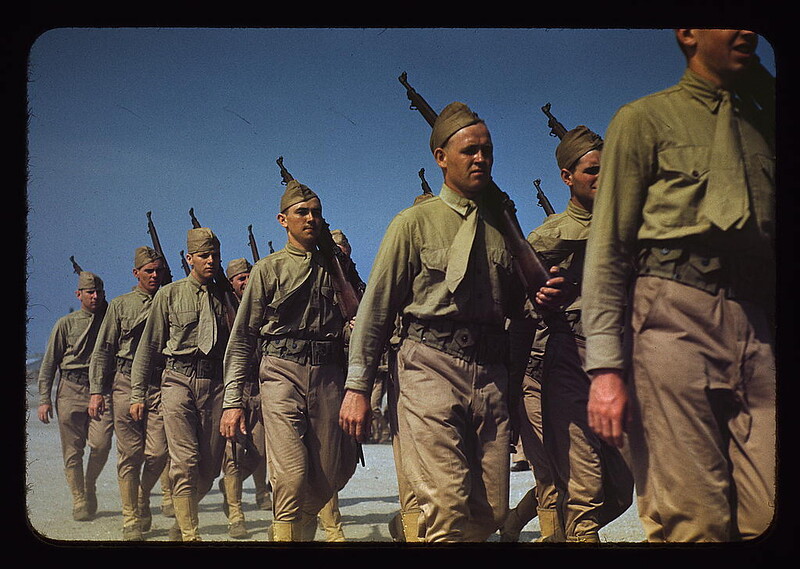
Among the many odd things about Operation Lone Star is the absence of a Sergeant Major who actually visits the troops. I previously wrote about Operation Lone Star here and here. Jim Betts, a retired E-9 in the Navy, knows something about what E-9’s do. In the US Army, the E-9 is the Sergeant Major. There is a SGM at command level from Battalion up through Army level in Washington, D.C. There is a top SGM in the Texas Guard assigned to Camp Mabry. SGM’s perform one critical function: ensuring the welfare and discipline of the individual soldier.

During my time in Iraq, I observed first-hand what happens when an army does not have a tradition of strong NCO’s. The Iraqi army had no tradition of strong, capable NCO’s.

And, at the top of the NCO food chain is the SGM. A SGM will generally visit every soldier and observe first-hand his/her discipline and equipment. If there are problems, a SGM will fuss at the NCO responsible. And, the SGM will report that deficiency to the Commander. The SGM is the Commander’s eyes and ears.

Master CPO Betts (Ret) is the father of one of the Texas Guardsmen deployed to the border. MCPO Betts says the SGM’s in the Texas Guard are not doing their jobs. They are not visiting and checking on the soldiers. See Texas Scorecard report here. Contrast that with my experience in the Texas Guard. No matter where my Infantry unit was, the SGM always found my soldiers. I would run into the Battalion SGM in the deepest darkest corners of Ft. Hood.

MCPO Betts says the soldiers are living in miserable conditions. When they first came to these long shuttered motels, they found dead roaches, dead rats and drug paraphernalia in the rooms. The soldiers who live in the trailers from tractor trailers are squeezed into very cramped quarters. They lack cold weather gear, first aid kits, Individual Body Armor (IBA), and helmets. They are sometimes shot at by the narco terrorists across the river. This problem is similar to the problem in the Viet Nam War. In that war, field grade officers rarely visited the soldiers in the bush. Never seeing the big cheese indicates their mission is not important. The worst thing you can do with a soldier is to ask him/her to risk their health and life for a mission that does not matter.

“Aren’t Doing Jack Shit”

And many soldiers are ding exactly that: nothing. As one soldier said, he is on duty two hours a day. Then he goes back to his quarters, drinks alcohol, and then does the same thing the next day.

“I work probably two hours a day. I just go back to my room and drink. And then rinse and repeat. I’ve been doing this for four months,” one member of the Guard told TPM. “I really don’t have a problem with the mission. I think the execution was the issue, and the fact that we have way too many soldiers down at the border, and a lot of them aren’t doing jack shit.”

Guardsmen expect to make sacrifices protect their states and their country. But, to sacrifice your job, your family, your business to work two hours a day and drink is more than they can bear. Mental health issues are worsening. See Talking Point Memo here.

Radios

The other problem is equipment. Because the Guardsmen were activated not through an Army post, they have to rely on state owned property. But, the National Guard is just not set up to acquire enough equipment for 20,000 members of the Guard. The OLS soldiers even lack radios. They have to rely on cell phones – if the phone has service. There is a reason why the Army does not rely on cell phones. Service in rural areas is often non-existent. Try getting cell phone service in the middle of North Ft. Hood. Without radios, the Texas Guard is just one catastrophe away from a scandal.

No Sick Call

Remarkably, the Texas Guardsmen often do not have sick call. A long-time military tradition. Sick call is supposed to work like this: the soldier reports he has an illness. He is then sent to a clinic for a check-up. But, MCPO Betts says his son had strep throat last November. He could not go on sick call, because there was no sick call. Again, being on state orders, they have no access to U.S. military hospitals or clinics. Texas is asking the Guard to perform a mission it cannot support.

And, I have to say, as a Company Commander or Battalion Commander, there is no way I would tolerate no SGM checking on the troops. The lack of SGM visits suggest they did not activate enough SGM’s to get to everyone. It is time for some officers to start transferring to the IRR and protest this complete lack of command support. There is no reason for the absence of a SGM.

The problem for most of us is that when the Guardsmen start leaving the Guard, we will not have them the next time we see a Hurricane Harvey.

The current conflict in Ukraine is truly remarkable on several levels. Of course, the human suffering is really the worst. The civilian death toll is likely to rise even higher. But, what about the Russian tactics? This author trained to fight the Soviet army for about a decade. So, the tactics are of much interest. Remarkably, the Russians have not really employed tactics, as we understand the term. The Russians are well-trained in tactics. But, they are not using them. They appear to have focused on seizing Kiev in a blitzkrieg type action, rushing columns of tanks and Armored Personnel Carriers (APC) toward the city.

But, unlike Russian doctrine, they did not precede their advance with mountains of artillery fire and air strikes. They truly, as we would have said in my Infantry days, “be-bopped” in with little perimeter security. Consequently, the advance into Kiev was subjected to devastating ambushes. The flank of an armored column is completely exposed when they simply drive into a built up environment with no security. They apparently did not dismount their Infantry as they attempted to drive into Kiev. In the more rural areas, they sent reconnaissance units which also simply drove toward crossroads. Apparently the recon elements intended to seize critical road junctions. But, in many instances, again, they did employed no flank security. They believed they could simply drive toward their objective with no security, as if they were in the Russian countryside. So, again, they were subjected to devastating ambushes.

Part of this is due to erroneous assumptions that ethnic Russians or Russian speaking citizens would welcome the invaders. In fact, they have not. The predominantly Russian speaking city of Kharkiv has resisted as much as anywhere else in Ukraine.

Abandoned Major Weapon Systems

Even more remarkable, numerous Russians have abandoned main battle tanks, self propelled howitzers, self-propelled rocket systems, trucks loaded with 122 mm shells. In some cases, those abandoned vehicles had run out of fuel. In other cases, the vehicles still had fuel and were fully functional. In Iraq, the terrorists used those same 122 mm shells to emplace horrendous IED’s (road side bombs). So, the Russians are actually leaving major weapon systems to be found by the enemy. That seems counter-intuitive.

But, it appears many Russians did not realize they were invading Ukraine. Ukraine and Russia have centuries old ties. They have friendships and family ties that know no border. The situation compares to the U.S. borders with Mexico and Canada. It appears many Russians at all levels are very reluctant to kill Ukrainians. And, that might help explain why up to now, they have employed little to no actual battlefield tactics. The Russians have a 10:1 advantage in everything, from tanks to APC’s to aircraft. It really is a matter of time, unfortunately, before the Ukrainians must succumb. Unless the Russians themselves revolt at something they really do not wish to do.

Most folks who file lawsuits are not afforded the opportunity to submit comments to the media. Most times, the media is not interested in yet another employment lawsuit. But, most lawsuits are not filed against Ken Paxton. AG Paxton never hesitates to discuss and deflect his legal troubles. In a recent interview, AG Paxton claimed the whistle blowers never came to him with their concerns before going public. He also claimed the four whistle blowers “infiltrated” his office to investigate their concerns. I previously wrote about the whistle blower lawsuit against the AG here and here.

The four whistle blowers, James Blake Brickman, Mark Penley, Ryan Vassar, and David Maxwell, all former top officers at the Attorney General’s office, say none of this true. They say they approached AG Paxton multiple times asking about his push to intervener in supporter Nate Paul’s problems. The four former top assistants say they can point to specific dates when they individually or as a group warned the AG that his actions were not lawful.

They also attack the 374 page report, signed by no one, which Paxton claims exonerates him. The four former top officials say the report does not even address some of the more serious allegations.

AG Paxton lost an appeal of the denial of his motion to dismiss. He then appealed the decision to the Texas Supreme Court. Submitting that appeal effectively means there will be no decision before the next election. See Texas Tribune report here.

AG Paxton is not helping his case by speaking publicly about it. Those public statements simply give the four plaintiffs an opportunity to address again their allegations. In this way, they help educate the jury pool.

In the end, soldiers are employees – yet so much more. The soldier business is a calling. It is perhaps the one profession in the world that calls on its members to conduct themselves with a sense of altruism every day.  . . . Who knew cleaning the latrine could be so altruistic? Even non-profits, in this author’s experience, do not rise to the level of selflessness required for the armed forces.

Employees

But, soldiers are fundamentally employees. They are manual laborers. As such, they are subject to manipulation and even abuse. The military system, when it works, prevents abuse. The command relationship is designed to prevent abuse. Indeed, that relationship even elevates persons who serve. In Connecticut, that potential for abuse apparently became a problem. A labor union sued for recognition that it may approach Connecticut National Guard members about joining the American Federation of State, County and Municipal Employees, Council No. 4. The union was concerned with 10 U.S.C. Sec. 976. Sec. 976 prohibits soldiers from joining or forming labor unions.

But, in reality, this lawsuit surely started with State Guardsmen wanting to join the union after they were activated for state duty. Many Guardsmen have been activated for covid duty. The Guardsmen were not allowed to bargain over covid precautions, even though they were directly exposed to the virus.

In November, 2021, the Department of Justice asked to dismiss AFSCME, Council No. 4 v. Garland, No. 21-CV-01524 (D.Conn.), on the grounds that it did not disagree with the union. DOJ agreed that the statute, 10 U.S.C. Sec. 976, only applies to soldiers on federal orders. When DOJ agreed with the labor union, that rendered the lawsuit moot. And, certainly the statute is a federal statute. As such it only applies to soldiers on federal orders.

Texas Guard Joins a Union

So, it is now not surprising that Texs Guardsmen have been joining a labor union. See the Army Times article here. The Texas State Employees Union formed a Military Caucus for Guardsmen activated for Operation Lone Star.

I have written about Operation Lone Star here and here. Operation Lone Star is a morally bankrupt operation. It lacks the character trait most valued in the Army: leadership. The Guardsmen have been required to give up their lives and even their incomes to satisfy a political objective. Many Guardsmen on the border do nothing more than watch persons fishing in the river. In this instance, the Guardsmen are exercising the only right left to them, joining a union.

Joining a union presents complications. Guardsmen attend weekend drill under Title 32, a federal statute. They are paid by the federal government, but remain under the command of Gov. Abbott. Will 10 U.S.C. Sec. 976 apply to Guardsmen on their weekend drills? Who knows. But, a smart Guardsmen will not attend any union meetings during weekend drill.

Leaders Communicate

John Bell Hood became famous as commander of the Texas Brigade during the Civil War. Before Hood, the Texas Brigade saw two regimental commanders driven away by the Texans. Hood’s predecessors looked good, but they did not really talk to the men. Hood, on the contrary, talked to them and accorded them some respect simply based on their pre-war civilian jobs and places in society. He treated them as human beings, not as tin soldiers. When commanders do not listen to their soldiers, they are driven away, or in this instance, they see their soldiers finding other ways to communicate.

Attorney General Ken Paxton asked his followers to harass Court of Criminal Appeals judges regarding a prior decision. That decision held that the AG cannot prosecute election fraud cases without permission from the local District Attorney. I previously wrote about AG Paxton’s call to arms here. It was an extraordinary call from any elected official. It was especially crazy since the AG’s office has filed a motion to reconsider. So, that decision is now pending reconsideration.

So, it is not surprising that a Texas lawyer, Michael Shirk, a former prosecutor for the Texas Department of Licensing and Regulation, filed a complaint with the Texas bar. The complaint alleges AG Paxton violated attorney ethical rules. Clearly, AG Paxton did indeed violate various ethical rules. As Mr. Shirk said, it is sophomoric. Persons cannot contact judges while a case is pending. This is way beyond free speech. As Shirk said, how would this work if persons approached judges at soccer games or at a restaurant? We would all like to influence judges prior to a decision. But, simple civil rules prevent us from doing so. And, of course, if lawyers could start approaching judges one on one, then it would be “katy bar the door.” Judges would have no peace. And, justice would be seriously corrupted.

Paxton called on his followers to contact CCA judges in three separate interviews. He clearly knew what he was doing. See San Antonio Express News report here for more information.

David Yamada, law professor at Suffolk University Law School, has written extensively on workplace bullying. He writes the blog on workplace bullying at Minding the Workplace. He published a seminal paper on workplace bullying in the Georgetown Law Journal in 2008. See that paper here. Mr. Yamada has drafted a model bill entitled, Healthy Workplace Bill. Several states have considered portions of his model bill. A few states have adopted portions of the bill. Massachusetts came close to adopting the entire bill in 2020, but the covid pandemic intervened.

Prof. Yamada defines workplace bullying and deliberate and repeated mis-treatment of an employee by co-workers or supervisors. Mr. Yamda found hundreds of cases in which an employee sued their employers for intentional infliction of emotional distress and the courts were just not interested. Many of the claims were dismissed before ever reaching trial. See ABA Bar Journal here for more about Mr. Yamada and his work.

The challenge with workplace bullying occurs when it is not connected to discrimination. When bullying is motivated by personality conflict  or simple dislike, there is very little the employee can do about it. Unless Prof. Yamada’s bill is adopted somewhere.


The Texas Military Department has activated at least 6500 members of the Texas National Guard, and perhaps as many as 10,000. Remarkably, they called some soldiers to active duty with only two or three days notice. In numerous news reports, Guardsmen have reported they are vastly under-employed. One Guardsman was quoted as saying all he has seen are fishermen. They call the mission Operation Lone Star. Since these soldiers were not activated through an Army post, they lack essential equipment. As recently as the freeze in early February, many soldiers lacked cold weather gear.

Operation Lone Star violates several principles of leadership, as taught by the U.S. Army. These principles were first developed in 1948 by World War II veterans. These principles ate battle tested. They are time tested.

“Know your soldiers and look out for their well-being”

The Texas Military Department (TMD) flunks this principle in a big way. Pulling Guardsmen from their lives for an under-employed mission with no foreseeable end date is the opposite of looking out for the well-being of part-time soldiers. Add to that, a miserable provision of Class II (personal equipment and clothing) and VIII (medical) items simply sets the soldiers up for failure, and encourages illness and injuries – again, the opposite of “looking out for their well-being.”

“Keep your subordinates informed”

Nothing is more fundamental than explaining to troops why a particular mission is important. If you cannot do that, you are not a leader, and the “mission” is not a mission. The bigger the mission and the more urgent the call-up, the greater the need for explanation. The TMD wholly flunks this critical principle of leadership. The TMD leadership has not explained to the Guardsmen and women why the mission is important. That omission may be due to the political window-dressing aspect of the mission.

“Ensure the task is understood, supervised, and accomplished”

One of the major issues with the Viet Nam War was the failure of field grade officers checking on their troops in the bush. Operation Lone Star was created by Gov. Abbott and MG Norris. It is their baby. They should be visiting troops and observing first-hand the quality of its execution. Those two non-leaders have compounded the leadership vacuum seen in the Viet Nam War ten fold. MG Norris and Gov. Abbott have only visited the border once since the activation became mandatory.

When the leader sends a soldier down range, s/he must be with them as much as possible. A good leader is always seen somewhere. The more complicated and controversial the mission, the more leaders need to be involved. Not less.

I previosuly wrote about the decision in Torres v. Dept. of Public Safety, 583 S.W.3d 221 (Tex.App. Corpus Christi) here. Later, after I wrote that post, the Texas Supreme Court denied Mr. Torres’ request for appeal. Now. Torres is appealing this decision to the U.S. Supreme Court. On appeal, the Office of the Attorney General is defending the appeal. The point of the Uniformed Services Employment and Reemployment Act (USERRA) is to protect service members, including National Guardsmen from discrimination. The Torres decision holds that Guardsmen who are employed by state agencies have no right to a lawsuit under USERRA.

Remedy Other than Lawsuits

The Torres v DPS case is now on appeal with the U.S. Supreme Court. The U.S. Supreme Court accepted the appeal. AG Ken Paxton claims in this appeal that Texas Guardsmen have remedies other than a USERRA lawsuit. He points to the Department of Labor. The DOL operates through a quasi-public entity known as the Employer Support of the Guard (ESGR). ESGR means well, but they often accomplish nothing. ESGR tries to work out employment problems through persuasion. But, often, ESGR simply postpones legal action by the Guardsmen until it is too late to seek remedy. AG Paxton adds that if DOL cannot work out an informal solution, then DOL can refer the matter to the US Attorneys office. See Brief in Opposition, Cause No. 20-603, p. 4. So, Paxton points to another “maybe” – something that might happen or might not. In reality, the US Attorney has many lawsuits which demand his attention.

And, in reality, according to DOJ’s own report to Congress, out of the thousands of Guard and Reservist discrimination cases reported to DOL since 1994, DOJ has only filed 107 such lawsuits. That means thousands of Reservists and Guardsmen have suffered discrimination with no remedy.

Tex.Govt.C. Sec. 437.412

AG Paxton then adds that if DOL cannot help the Guardsmen, a Texas Guard member can file suit under Tex. Govt. Code Sec. 437.412. But, this lawsuit is limited to instances when the Guardsmen has been fired due to having been called to training or active duty. Govt.C. Sec. 437.204. USERRA is more broad. The USERRA applies to any discrimination based on military “affiliation.” The USERRA specifically applies to any service member even if s/he has not actually performed duty in the uniformed services. 38 U.S.C. Sec. 4311(b).

Govt. Code Sec. 437.412 only applies to actual termination and only to termination connected to actual training or active duty. Govt.C. Sec. 437.204. While, the USERRA applies to any loss of benefit, failure to re-employ, lack of promotion, etc. 38 U.S.C. Sec. 4311(b) and (c). The USERRA applies to membership, application for membership,  obligation of service, participation in an investigation of a violation, and even to simply making a statement pursuant to a violation of the USERRA. 38 U.S.C. Sec. 4311(c). The USERRA applies even to persons whose “membership” in the military served as a motivating factor in the adverse employment decision. This broad use of the term “membership” indicates that even prior membership in the military violates the USERRA. Whereas, Govt. Code Sec. 427.412 only applies to current members of the Guard.

Statute of Limitations

Give. Code Sec. 437.402 allows an affected Guardsmen to file a complaint with the Texas Workforce Commission, Civil Rights Division. That sounds similar to any complaint of discrimination. But, Sec. 437.412 does not indicate when such a complaint must be filed. Most discrimination complains must be filed within six months of the act of discrimination. Since Sec. 437.001 only applies to terminations, the complaint probably must be filed within six months of the termination.

Tex.Govt.C. Sec. 437.412 then requires that a lawsuit be filed within 60 days of a notice of right to file suit. But, the USERRA does not have a statute of limitations. So, if a Guardsman, for example, relies on ESGR to work out his employment issues, he may miss the initial six month deadline. ESGR is composed of volunteers. There is a paid coordinator. But, the ESGR workers themselves are volunteers. So, the process generally takes a very long time.

Worse, Govt. Code Sec. 437.412 is an obscure statute. I have never heard of it. The statute has only been around since 2011. A quick search of Westlaw indicates only one mention of Sec. 437.001 since 2011: in that same Torres v. DPS decision from 2018.

Never Experience Discrimination

So, AG Paxton, the chief law enforcement officer of the state, is referring aggrieved Guardsmen to: 1) a DOL process that overlooks thousands of complaints and 2) to a statute that has never been used. Indeed, in his appeal brief, AG Paxton notes there are no reported decisions for Sec. 437.001. Paxton thinks that means Texas Guardsmen never experience discrimination. Brief in Opposition, p. 5.   . . .  That’s a good one! AG Paxton clearly has a sense of humor.

But, seriously, Paxton’s claim is ludicrous. Every Guardsman and every Reservist faces some pressure to modify his/her training to suit a civilian employer. That is just a fact of life in the Guard. That Paxton’s office would make such a silly claim suggests the AG’s office is flat lying, or they have chosen to not talk to an actual member of the Texas Guard before filing its brief on a major appeal.

Having served 28 years in the National Guard in two states and in the Reserves, I can attest that Paxton is quite wrong. Guardsmen suffer discrimination on a regular basis. Most of us, however, find other ways to cope. In my own firm, I always seem to represent a Guardsman or Reservist who was fired due to his Guard/Reserve membership. In the state’s motion to dismiss one my cases, the AG’s office pointed to two Guard lawsuits which were dismissed due to the holding in Torres v. DPS. And, of course, Capt. Torres claims he was fired due to his membership in the Texas Guard. So, there are three cases right there of discrimination, which Paxton’s office denies has ever occurred.

AG Paxton is not supporting Texas Guardsmen. No one forced him to file a motion to dismiss in the Torres case. AG Paxton is supporting the state employer. But, he is not supporting members of the Texas National Guard.

In a recent lawsuit in which I represented a combat veteran, the Assistant U.S. Attorney did not file a motion to dismiss. The evidence developed well for the plaintiff, my client. So, the AUSA suggested mediation. The Assistant US Attorney was a member of the Reserves himself. That is what a government attorney who supports veterans will do. He will avoid dismissal motions and suggest settlement talks if the evidence favors the veteran. AG Paxton does not support veterans.

In Johnson v PRIDE Industries, Inc., 7 F.4th 392 (5th Cir. 2021), a co-worker referred to Michael Johnson, a black worker as “mijo” (son) and “manos” (hands) several times.  The same co-worker, Juan Palomares, also referred to Mr. Johnson as “es mayate” (this n—–) on some occasions. Mr. Palomares also used the term “pinches mayates” (f—— n—–) and “pinches negroes” (damn black)when referring to Mr. Johnson. Johnson filed suit for racial discrimination under 42 U.S.C. Sec. 1981.  Mr. Johnson complained to his supervisor and to other company officials, but the harassment continued. Johnson filed a complaint with the EEOC. About the time he received the right-to-sue notice, PRIDE approached Johnson about his many absences. The employer suggested and Johnson agreed that he would resign. His resignation letter said he had missed many work days. The letter said he missed so much work, because going to work was too stressful.

Later, Johnson filed suit. The employer moved for summary judgment, which the court granted. On appeal, the Fifth Circuit disagreed. It reversed the summary judgment. The higher court said that the use of this terms, even if in Spanish, amounted to “severe or pervasive” harassment. There was substantial factual dispute regarding whether these words created a hostile working environment. The court had no problem finding the use of terms like “mayate” to be discriminatory. Regarding the term, mijo, the court said the term could indicate racial bias. It would depend on the context. Mijo is often used in Hispanic culture as a term of endearment. But, in this context toward a black man, perhaps it was intended as something else, said the court.

But, said the court, the constructive termination came seven months after the harassment ended. The court found that summary judgment was proper regarding the constructive discharge. The court noted that PRIDE did not appear to take any concrete steps regarding Mr. Johnson’s complaints of discrimination. But, even so, the harassment appeared to have ended about the time Mr. Johnson filed his EEOC complaint. So, regarding the claim of constructive discharge, the court found summary judgment was appropriate.

See the decision here.