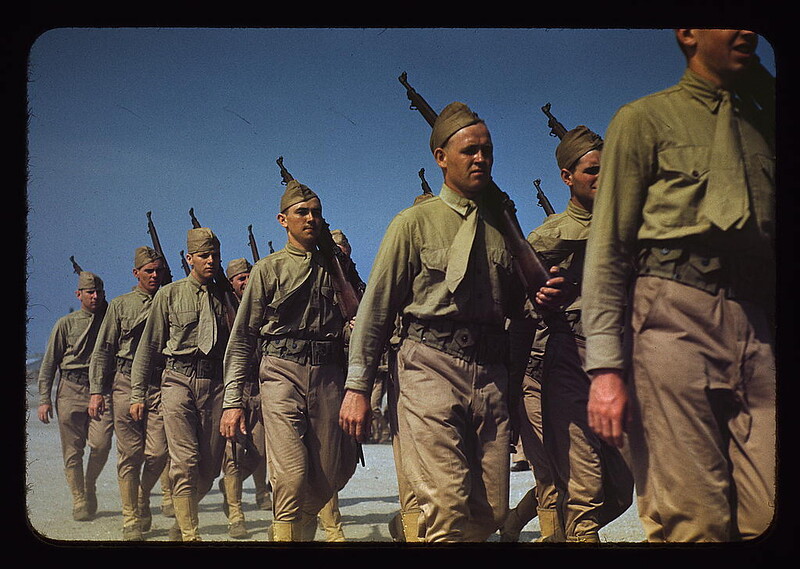
Memorial Day is a time to remember those veterans who gave all they had to give for us. I always think of  1SGT Saenz at times like this. Some 100 of us IRR members met at Ft. Jackson on March 13, 2005. We reported to Ft. Jackson, South Carolina for in-processing and reintroduction to the US Army.  We knew we would be deploying to Iraq.  Then MSGT Saenz had a huge laugh and a booming voice. He laughed a lot.

Those first few days, some Reservists were angry about being called up. Some were happy to be there. MSGT Saenz was reasonably happy to be where he was, preparing for duty in a war zone. Later, as I learned, he performed very well. He inspired his soldiers. He did everything a competent, dedicated leader would be expected to do.

He died in the dusty streets of Baghdad near the end of our tour. We were leaving Iraq in just a couple of weeks when his HMMWV was struck by an IED. He was out on a convoy training members of the incoming unit. Some of his regular team members were not with him on that run. He died doing what he did best, serving others.

We should all serve our country half as well as 1SGT Saenz. There is a nice tribute to 1SGT Saenz here. As John Bear Ross mentions on his website, do not mourn that a man like 1SGT Saenz died. Rejoice that a man like 1SGT Saenz lived.

After Ft. Jackson, we, the IRR folks, were assigned to various Civil Affairs units. I was assigned to the 445 CA Battalion. We called ourselves the Pirates. Whenever we snapped to attention, we would all let out a gutteral “arrgh” in true Pirate fashion. Paul A. Clevenger was a Pirate. He was one of the younger soldiers. SGT Clevenger was promoted from SPC4 during our time In Iraq. He did well, from what I heard.  I just remember that he smiled, often. His obituary is here. Like many of us, he returned to the States with some demons deep inside. He took his life some two years after we returned. SGT Clevenger is another casualty of the war  – he too gave his country all he had to give.

On this Memorial Day, we remember the fallen – but not the Confederate fallen. They were removed from the list a few years ago.
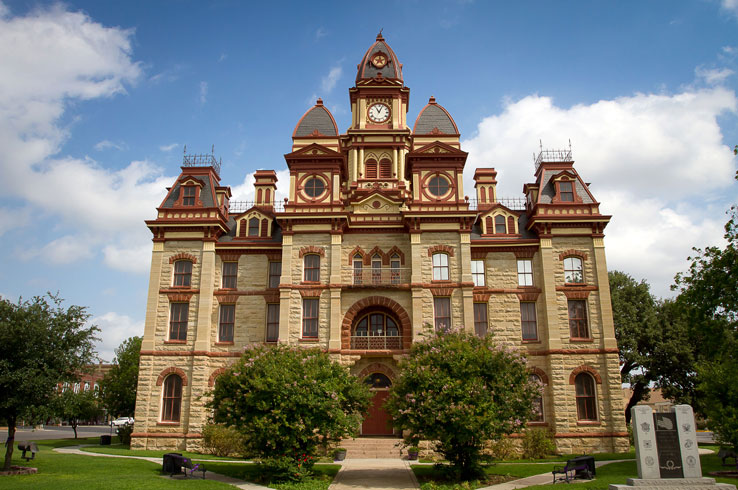
Well, Attorney General Ken Paxton cannot say he is surprised. The Texas Bar Association has taken action against his bar license. Just a couple of weeks ago, the Texas Bar first sued Paxton’s First Assistant, Brent Webster. Mr. Webster signed the same very weak lawsuit that AG Paxton filed in 2021. I previously wrote about that bar action against Mr. Webster here. First Asst. Webster signed the same frivolous pleading, so it was 100% likely Paxton himself would also be sued.

The lawsuit against AG Paxton explains that contrary to Paxton’s assertions in his frivolous lawsuit, he uncovered no evidence of election fraud. The suit claims AG Paxton made dishonest representations that there was enough voting malfeasance to make a difference in the election result. AG Paxton claims this action is being brought by “leftists” See Texas Tribune report here.

But, I can assure you that there are no leftists active on State Bar Committees. This action has been filed by a standing committee known as the Collin County Commission for Lawyer Discipline. Every Texas County has the same committee comprised of local volunteer attorneys. They would not have filed this action unless they were quite certain of the evidence – or in this case, the absence of evidence of voter fraud.

It was AG Paxton’s choice to let this process go this far. The normal process in all of these grievance committees is to allow the accused attoney to accept review by the committee or for the attorney to seek trial in open curt. Normally, the committee only issues a private reprimand for the first offense. Paxton knew if he chose to proceed with the committee only, then all he would see was a private reprimand. But, It seems that AG Paxton and First Asst. Webster both chose a full-blown trial in open court.

AG Paxton has proven to be adept at delaying legal actions against him. That may be his current plan, as well. These grievance committees will sometimes impose additional discipline if they are forced to file suit. AG Paxton is playing with fire.


Congress passed the Families First Coronavirus Response Act (FFCRA) in March, 2020 in response to the coronavirus pandemic. Soon afterward, Congress also passed the Emergency Paid Sick Leave Act (EPSLA). As the name suggests, the EPSLA allowed employees to take time off from work to quarantine due a possible covid19 infection. The leave requirements portion of the statute expired in December, 2020. But, prior to that expiration, Enny Alvarado was working for The Valcap Group, LLC. In November, 2020, a co-worker tested positive for the covid19. Alvarado had been working closely with that co-worker. Ms.  Alvarado called her doctor, who told her she should take a covid19 test and quarantine until she received the results. Valcap had no policies then in place for the pandemic. Ms. Alvarado asked for and received medical leave to quarantine at home. Later that same day, the company fired her.  Her employer said anyone who takes covid19 leave would be fired.

EPSLA

Ms. Alvarado sued under the Americans with Disabilities Act, alleging “regarded as” discrimination and under the EPSLA. Valcap moved to dismiss saying the EPSLA did not have a provision similar to the Family Medical Leave Act stating that an employer may not “interfere” with a worker’s right under the statute. The court agreed with the Defendant. But, it noted that to the extent Alvarado claims in her suit that Valcap disciplined or discharged her for pursuing her rights under the EPSLA, she may indeed maintain such a suit. The EPSLA does in fact provide that an employer may not discipline or discharge an employee for seeking her rights under the statute.

The employer also argued that because Ms. Alvarado did not take her leave, she could not allege she was fired for taking that leave. She had simply requested it. The court rejected this argument, saying that requesting leave amounted to taking leave under the EPSLA. And, at least on this blog, this employer gets an “F” for making a silly argument. The only reason she did not actually take her leave was because she was fired before she could take that same leave – which had already been approved by the employer.

ADA

The court granted the motion to dismiss regarding the worker’s ADA claim. It found that at most, she had pleaded that she was fired for seeking to quarantine, not because her employer perceived her as having an impairment.

See the decision in Alvarado v. The Valcap Group, LLC, No. 21-CV-1830 (N.D. Tex. 1/30/2022) here.


Attorney-General Ken Paxton is determined to get into trouble. He filed that very weak lawsuit in 2021 seeking to overturn the 2020 election results. Sixteen Texas lawyers, including four former Texas bar presidents, filed an ethics complaint about that weak lawsuit. In Texas, any person can submit a complaint about a lawyer’s ethical practices. I previously wrote about that complaint here. A Texas Bar Association committee found merit to the complaint. AG Paxton claimed the committee was composed of liberal lawyers. But, that is not likely. There just are not many “liberal” lawyers active on Texas Bar committees. Most lawyers on these committees actually come from the larger law firms, who are seeking to fulfill their Bar obligations.

Now, the Bar has filed suit in Williamson County against AG Paxton’s First Assistant, Brent Webster. He signed off on that weak lawsuit along with AG Paxton. If the First Assistant on that frivolous lawsuit is sued, you can be certain AG Paxton will also be sued. That also means the two lawyers chose to not have their case decided by a Bar committee. They chose the public route of trial in open court.

The San Antonio Express News states that among the possible sanctions is disbarment. Well, not quite. The Texas Bar, like most Bar associations, is very conservative. It follows a very predictable pattern of issuing a private warning for the first offense, and a public warning for the sound offense. Only then does actual disbarment become an option. Bit, generally before disbarment, the Bar will place a lawyer on probation first.

See more about this lawsuit in the San Antonio Express News here. And, I am still just shaking my head at how many lawyers rolled dice with their law licenses, all to beg Donald Trump for his favor. And, you know, it is very rare for lawyers to seek a public trial. Most prefer the more private avenue of a committee review.

So, Justice Alito’s leaked draft opinion suggests Roe v Wade will be overturned. What does that possibility suggest for other rights? Justice Alito wrote in the draft opinion that the 14th Amendment did not specifically name abortion and otherwise does not protect a right to abortion. The draft opinion concerns the case of Dobbs v. Jackson Women’s Health Organization. Follow this link to see the draft opinion here.

The justice said, “That provision has been held to guarantee some rights that are not mentioned by the Constitution, but any such right must be ‘deeply rooted in this nation’s history and tradition’ and ‘implicit in the concept of ordered liberty.” Lawrence H. Tribe, a constitutional legal scholar from Harvard University, wrote an op-ed for the Boston Globe criticizing the draft opinion. Mr. Tribe noted that such language suggests that rights we tend to take for granted, such as right to marry a person of our choice, birth control, with whom to have sex, how to raise children, and a lengthy list of other freedoms – also are not specifically named in the Constitution and also do not have deep roots in our country’s history.

Erwin Chemerinsky, dean of the Berkeley School of Law, noted that many rights we now enjoy rely on the same privacy interests which support Roe v. Wade. Griswold v. Connecticut, 381 U.S. 479 (1965) rests on that same privacy interest, which is not specifically identified in the Constitution. Griswold protects the right to use contraception. When Roe falls, how long will it be before states start passing laws restricting contraception and the morning-after pill? asks Chemerinsky. Indeed, late last week, Tennessee passed a bill making it a crime to use the morning after pill.

In Obergefell v. Hodges, 576 U.S. 644 (2015),  the Supreme Court extended the due process clause and the equal protection clause of the 14th Amendment to same sex marriage. Neal Katyal, former Solicitor General of the U.S. wrote in an opinion piece that the Obergefell decision does not rest on deep-seated tradition, but on a sense of traditional American liberty. Jordan Woods of the LGBTQ Law & Policy Program, noted that Justice Alito’s reasoning in the draft opinion is similar to his dissent in Obergefell.

Other experts note that in the draft opinion, Justice Alito expressly states the decision only applies to abortion. The Dobbs draft opinion states that the Roe decision is different from these other decisions because it addresses potential human life. But, even so, the same reasoning will clearly apply to a wide range of interests all of which ultimately rest on this privacy interest – which is not specifically named in the Constitution, yet so many courts seem to find. See the ABA Bar Journal here for more information.

Too, Justice Alito’s tone in his draft opinion is concerning. Both sides in this huge abortion debate have valid points. I do not believe it helps either side of that debate for Justice Alito to engage in a mocking, even contemptuous  tone in his draft opinion. I hope that this contempt will be written out in subsequent drafts.

The Western District of Texas recently denied in part and granted in part a Rule 12(b)(6) motion to dismiss in the matter of Doe v. U.T. at San Antonio, No. 20-CV-1039-DAE (W.D. Tex. 9/27/2021). The Plaintiff sued UTSA based on several theories. He also sued two administrators in addition to the school itself. The Plaintiff is Egyptian Moslem. He sued under Title VII, 42 U.S.C. Sec. 1983, the First Amendment (free speech), and the Equal Protection Clause. As I have mentioned here before, it is unwise to sue under everything but the kitchen sink. Suing under so many different statutes and provisions suggests a lack of confidence in your case.

Equal Protection

In the end, the court granted the motion to dismiss regarding free speech and the Equal Protection Clause. This being a 12(b)(6) motion to dismiss, the court only looked at the Complaint. In the complaint, the Plaintiff did not allege a comparator employee for equal protection. Neither did he allege discriminatory intent.

Free Speech

Regarding free speech, the court noted in the Fifth Circuit considers qualified immunity to be the norm. Qualified immunity “shields all but the incompetent or those who knowingly violate the law.”

Discrimination

Regarding Title VII and Sec. 1983, the court noted that at the pleading stage, the Plaintiff need not name comparator employees. Doe was alleging that he was treated differently because he is Egyptian and Moslem. He was denied certain meetings. He was placed on administrative leave during an investigation of him. But, non-Egyptian employees were not placed on administrative leave during an EOS investigation. The court denied dismissal on those grounds, saying that at the pleading stage, Doe did not need to identify specific comparator employees, yet.

Regarding Sec. 1983, the court found that the Plaintiff is seeking only prospective relief, such as reinstatement. But, Plaintiff sued the two administrators in their individual capacity, not in their official capacity. There is no relief possible from two administrators in their individual capacities. Therefore, Doe’s pleading fails. The court granted dismissal as to the two administrators in regard to Sec. 1983.

So, the claim based on Title VII remains.

We all know defense firms sometimes spy on opposing parties, but evidence of that spying is very rare. But, there was such evidence in one Georgia case. Cruz Mezquital sued a driver who was insured by American Family Insurance. She won a $30 million judgment. On appeal, the verdict was reversed. The higher court ordered a new trial. The law firm defending the suit was Baker Donelson, headquartered in Atlanta. With over 650 attorneys in multiple cities, Baker Donelson qualifies as a mega firm by any definition.

On remand, the law firm hired Martinelli Investigations to learn more about Ms. Mezquital’s injuries. They installed GPS devices on her vehicle and set up trail cameras on her property. They trespassed on Ms. Mezquital’s property to place those cameras and devices. Ms. Mezquital became aware of the spying. At some point before the second trial, Baker Donelsen used photos acquired from the surveillance. The plaintiff then settled the car wreck case.

Ms. Mezquital then sued two lawyers at Baker Donelson, the insurance company and the investigator for invasion of privacy, trespass to property, and trespass to personalty. Mezquital is seeking $12.2 billion from the insurance company and $1 billion from the law firm in punitive damages. The defendants filed a motion to dismiss, which the court largely denied. It did dismiss a claim based on negligence per se, but allowed the other claims to remain. It denied a motion based on res judicata, finding the lawsuit for a car crash and one for spying were very different. The court also found that a release signed by the plaintiff for her first case did not apply to the second lawsuit. The plaintiff’s attorney said he expected to see frivolous appeals. I bet he does. See ABA Bar Journal report.

They found his body three days after he was pulled under by the current. SPC Bishop Evans jumped in to save a couple of illegal immigrants. He did what Guardsmen have always done, save someone he never met. Two illegal immigrants are alive due to his efforts.

As the Justice of the Peace arrived, she saw that his body was covered with an American flag.  DPS Troopers removed their hats. Nearby soldiers who had been looking for the young Guardsman saluted when they saw his body. The Troopers shed a few tears. See San Antonio Express News report.

Rare indeed it is when a National Guardsman dies while on state duty. Usually, state active duty means driving a truck through flooded waters or bringing folks their medications. But, these days in Texas, state active duty means presenting the optics of securing our border. In the military, we are often called upon to stand there, or sit here and look good. We call it “eye wash.” Your role is to simply look good, to suggest you are doing something productive. We are generally okay with eye wash. It is part of the job. … In limited quantities.

But, dying for one man’s political ambition is not okay. Wasting the life of one young soldier is never okay.

<Slow salute> SPC Bishop Evans.

I have written about Operation Lone Star here and here. It is an exceedingly stupid mission, generated simply to secure an election. It is fundamentally flawed in so many ways. Chief among its problems is a lack of work for its about 6,500 Guardsmen/women. A close second is the lack of basic equipment. The soldiers lack first aid kits, ballistic vests, and helmets. They also lack federal benefits. If they are hurt or simply ill, they cannot seek Veterans Affairs Department medical care. They are not on federal orders, so they cannot go to the nearest Air Force base or Army post and see the on-post doctors. They must seek medical insurance like any state employee. But, unlike state employees, they have not been briefed on their medical insurance benefits. So, it is not surprising that many have joined a state employee union.

What If

But, the worst oversight surely is what if. In the Army, we would say what if the sh** hits the fan. What if a crisis occurs and a Guardsman is shot or passes out from heat exhaustion on some lonely ranch. Or, what if a Guardsman sees an Illegal Immigrant struggling in the water and jumps in to help. Anyone who knows the Guard knows 99% of Guardsmen will jump in despite being told not to. The reason most Guards guys join is that hero moment. That is a big part of the attraction. As one Guardsmen told me anonymously regarding Operation Lone Star:

“Despite being briefed not to help, we will always do the right thing and help even if it puts our lives in danger.”

Disappeared

Now, the worst has happened. An unidentified Guardsman did just that, he jumped in to help a struggling immigrant. It might have been a child or a woman. Guardsmen are not saints. But, that is what we do, we jump in to save folks. Anyone at state leadership, including the Governor, who does not know that is not paying attention. Now, that Guardsman has disappeared in the Rio Grande. See Army Times report here. The Rio Grande is very shallow in some parts, but in other parts, the water is quite deep, especially at this time of year.

The Texas Military Department, which has minimized the equipment shortages, the pay problems and the lack of genuine work, has issued a statement – anonymously as they always do – saying the Guardsmen has simply disappeared. He has not necessarily drowned. But, if he is missing, that is a big deal. The young man or woman is either AWOL or drowned. No, he has drowned. The TMD is wrong, again. One young Guardsman died doing what Guardsmen do everywhere, trying to save someone he never met.

If the young man or woman had died in the sandbox, his friends and family would know he died for something worthwhile. He would have died defending his country, as he understood his duty. But, to die to help one governor win re-election?? I want to know who will tell this young Guardsman’s family that he gave his life, so Gov. Abbott could win his next election.

Increasingly popular during the pandemic are apps known as “bossware” and “tattle ware.” These software programs allow supervisors to track the work performed by work-from-home employees. These apps can monitor websites visited, log key strokes, take screenshots and even record video and audio. But, do such apps violate an employee’s privacy? Some states, such as Delaware, New York and Connecticut, require employers to notify employees they are being monitored. But, most states do not. Even so, monitoring rises to a new level when it is at your home.

Texas Law

Even in the traditional workplace, Texas courts allow employers to monitor employee phone calls when using the employer’s phone. An employer can take photos of the employee’s publicly displayed calendar at work. Oyoyo v. Baylor Health Network, No. 99-CV-00569,  2000 WL 655427 *5 (N.D. Tex. 5/17/2000). But, if the employer monitors phone calls, it must notify the employees. Texas has no statute governing employee privacy. So, any lawsuit must rely on the common law tort of invasion of seclusion or of privacy. Since there is no state statute, any court addressing alleged invasion of privacy at a worker’s home would have to address what parts of the home would the worker have an expectation of privacy. That would lead to a very fact-intensive inquiry regarding where the at-home worker conducts his/her work.

Purchases from software makers, such as Hubstaff and Awareness Technologies surged during the pandemic. Marketed under names like Time Doctor and StaffCop, these new technologies represent a new sort of intrusion on the work place. According to one survey, 60% of companies were using the software. That represented double the number before the pandemic. Many employers obtain consent from the employee for such monitoring. But, we wonder what sort of consent. Does the content apply specifically to key strokes, or to something more? See ABA Bar Journal report here for more information.