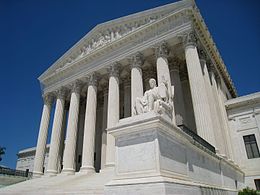
The U.S. Supreme Court accepted an appeal regarding the administration’s travel ban. It also partially overruled the injunctions against the travel ban issued by the Ninth Circuit and the Fourth Circuit. The injunctions were issued to stop the ravel ban pending appeal. The administration is appealing the injunctions, but it is likely the court will hear the entire appeal. not just the injunctions. Oral arguments are set for October regarding the much criticized travel ban. See CBS news report here. This is the first court victory for the administration regarding the two travel bans. I previously wrote about the second ban here and here.


In federal court, sanctions are a real possibility. The parties need to behave themselves and act in a professional manner. That even applies to a settlement conference. In Chen v. Marvel Food Services, Inc., No. CV-15-6206 (E.D. N.Y. 11/21/2016) (FLSA), the court scheduled a settlement conference. The parties were required to come to court and discuss settlement. Under the local rules, that means both parties had to comply with certain deadlines in submitting settlement offers and responses. The plaintiff submitted his settlement offer weeks prior to the conference. But, minutes before the conference was to start in court, the plaintiff doubled his settlement demand. He explained that he had re-evaluated his case. The defendant was unable to proceed with the conference because he had come with authority to settle based on the prior amount.

The Defendant filed a motion for sanctions. The plaintiff did not oppose the motion, but he did move to strike the motion because it contained the prior settlement demands. The plaintiff argued that the motion for sanctions contained confidential information. The court denied the motion to strike. The court noted this was an action based on the Fair Labor Standards Act. Therefore, the ultimate settlement amount was not confidential. The court then found that in doubling his settlement demand just minutes before the conference was to start, the plaintiff acted in bad faith. It sanctioned the plaintiff $1,000, which were the expenses of the defendant’s lawyer for that day. See the decision here.

The Ninth Circuit has joined the Fourth Circuit in upholding the injunction against Pres. Trump’s travel ban. The unanimous three-judge decision found that of the six countries identified in the ban, none had ever posed a risk to the United States. I wrote about the Fourth Circuit’s recent decision here. The Ninth Circuit pointed to the same two travel bans. But, the Ninth Circuit did not devote as much attention to Pres. Trump’s statements about the travel bans. The opinion notes the complete lack of a link between the nationality of the six countries and any terrorist organization. The second travel ban points to no link between those persons seeking entry to this country and any unsettled conditions in those six countries. In short, the second travel ban did not provide any basis foe a complete ban on travel from those six countries. The court did point to a statement by Pres. Trump on June 5 in a tweet that he was concerned with the six countries themselves, not the 180 million persons living in those six countries. Slip opinion, p. 40 n.14.

The President tweeted: “That’s right, we need a TRAVEL BAN for certain DANGEROUS countries, not some politically correct term that won’t help us protect our people!” The court noted that Sean Spicer has said the President’s tweets represent official U.S. policy.

It also cited the 1965 statute, the immigration and Nationality Act of 1965, which prohibits discrimination against any one nationality in the country’s immigration policies. That act specifically provides that no preference on immigration will be based on “nationality.” See 8 U.S.C. Sec. 1157. See the decision in Hawaii v. Trump, No. 17-00050 (9th Cir. 6/12/2017) here.

And, of course, the next day, the President continued his assault on the judiciary by suggesting the Ninth Circuit was not concerned with national security. See Politico report about his tweet.

Against my better judgment, sometime back, I let the company representative talk to my client at a mediation. I am always interested in trying something different. The employer suggested the company rep talk directly to my client, the employee who had sued that company. Always interested in trying something different, I thought, “let’s give it a try.” The meeting did not last long. After just a few minutes, the representative started pointing out all the things the plaintiff should have done differently: she should have called the HR hotline, she should have done this, she should have done that. He was blaming the victim.

We see that blaming the victim thinking when former Director of the FBI explains a difficult meeting with Pres. Trump. The President asked him to let up on the Flynn investigation. Mike Flynn, he assured the Director, was a “good guy.” So, when Director Comey testified to the Senate last week, he was asked several times why he did not prevent that one-on-one meeting? Why didn’t he insist on someone staying in the room? Dir. Comey is a big, tough guy, after all.

Pres. Trump placed Director Comey in an untenable position. Mr. Comey did not arrange the meeting. He was not the supervisor. He was still new to working with a new president. Like my client, the victim of extended harassment, she was not the boss. She wanted to make a difficult relationship with her boss work. She did talk to HR, but did not call the HR hotline. She tried to resolve her problems with her boss as quietly as possible. She hoped to save her job, not end it. As did Director Comey.

The Director was honest. He said he was a coward. Maybe, he would handle it differently if there was another such meeting with the president. All victims of an overbearing boss try to make it work. And, all victims of an overbearing boss shrink from the challenge, at first.


A  request for accommodation need not mention any specific words, so long as the request puts the employer on notice that an accommodation is needed. Indeed, if an impairment is obvious, caselaw does not require the person to actually request the accommodation. See Brady v. Wal-Mart Stores, 531 F.3d 127, 135 (2d Cir.2008); McElwee v. Cnty. Of Orange, 700 F.3d 635, 642 (2d Cir. 2012). Generally, a doctor’s note or medical restriction of some sort suffices to serve as a request for an accommodation. See, e.g.Cehrs v. Northeast Ohio Alzheimer’s Research Center, 155 F.3d 775, 784 (6th Cir. 1998) (doctor’s note was sufficient, and court would infer that employer read it because it was located in plaintiff’s personnel file). So, the decision in Acker v. General Motors, No. 16-11174 (5th Cir. 4/10/2017) is surprising. That decision found that FMLA leave cannot constitute a request for an accommodation.

Lonny Acker worked for GM for over ten years. He was diagnosed with anemia, which causes blackouts, heart palpitations and severe fatigue. It can cause dizziness for prolonged periods. He requested and received intermittent FMLA leave. He was out on leave some 30 times over a six month time period. Five absences were considered unexcused. Mr. Acker testified he called in for those absences, but the phone records for his phone did not support that claim. He was suspended twice, once for 30 days. He then filed suit for the unpaid suspensions.

The employer moved for summary judgment. The lower court granted the motion for summary judgment, which the Fifth Circuit affirmed. The court insisted that Mr. Acker cannot create a factual issue based solely on his deposition testimony, since his testimony conflicted with the phone records. That is unfortunate. GM accused him not of not calling in but of not calling in to the right places. He allegedly called the absence phone line but did not call the Benefits & Services phone line, according to GM. Five of the 30 absences were in question. Plaintiff Acker insisted he called in correctly on those days. But, said, the court, his testimony was not enough to avoid summary judgment. So, the court affirmed summary judgment regarding his FMLA interference claim.

The employee then argued that his FMLA leave should constitute a request for an accommodation. He admitted that his FMLA request did not follow the GM procedure for seeking a request for an accommodation under the ADA and the state equivalent of the ADA. Mr. Acker argued that generally, a request for medical leave is generally also a request for an accommodation. No, said the court. The panel stated that FMLA and the ADA are two different statutes. But, of course, the two are different statutes.  That the two are different statutes wth different definitions does not explain why a request for medical leave does not serve as a request for an accommodation.

The court then added that “FMLA leave is not a reasonable accommodation under the ADA.” It cited Harville v. Texas A&M Univ., 833 F.Supp.2d 645, 661 (S,D.Tex. 2011), which cited Trevino v. United Parcel Service, No. 3:08-CV-889-B, 2009 WL 3423039 *12 (N.D. Tex. 10/23/2009). The court in Trevino does indeed find that a request for leave under the FMLA does not serve as a request for leave as an accommodation. But, it does not explain why. It does cite to Navarro v. Pfizer Corp., 261 F.3d 90, 101 (1st Cir. 2001). But, the Navarro decision nowhere finds that in all cases a request for medical leave under the FMLA can never serve as a request for accommodation. Instead, it answered a different question, whether a daughter’s illness met the definition of disability under the FMLA. If the daughter’s diagnosis satisfied the definition of disability under the FMLA, then the mother was entitled to leave to care for her daughter. The question of whether a person asking for medical leave under the FMLA could be seen as also requesting leave as an accommodation was never addressed.

The salient question which the Fifth Circuit opinion did not address was whether the leave request under the FMLA satisfied the requirements for requesting leave under the ADA? The caselaw states in clear terms that no “magic” words are necessary to request leave as an accommodation. There appears to be no reason why a request for leave under the FMLA cannot serve as a request for leave as an accommodation, assuming the normal ADA factors are also satisfied. That is, so long as the employee places the employer on notice that the leave may apply to a qualified disability, then yes, a request for leave under the FMLA ought to serve as a request for leave as an accommodation. One can conclude from the court decisions, however, that judges prefer to keep legal matters tidy and not allow things to “slop” over from one statute to another……..

See the decision in Acker v. General Motors here.


Pres. Trump seriously undercuts his own case when he states publicly that the travel ban currently on appeal is a “watered down” version of the first travel ban. See CNN news report. That is a problem because the first travel ban made specific references to establishing a religion. The second ban removed that language. I wrote about the Fourth Circuit decision here. The DOJ lawyers tried to argue that the travel ban did not target Moslems. The Fourth Circuit were not impressed. They noted the President’s many public statement syndicating the travel ban did indeed target Moslems. The administration has also consistently claimed it was not a “travel ban.”

With his latest remarks, the President has once again undermined his own case.

The Trump administration has proposed huge cuts to the Social Security Disability payments. Known as SSDI, these payments go to persons who can no longer work. The Trump administration has proposed cuts of $72 billion over ten years. They have also proposed reducing the back pay period from 12 months to six to save more money. As one woman exclaimed, these benefits apply to persons with stage 4 cancer. Heck, I had a client once with a brain tumor. It was not operable. Yet, even he was initially denied benefits and had to appeal.

The White House Budget Director, Mick Mulvaney, claims the administration wants to “test” new approaches to labor force participation. But, he did not explain how the administration would screen out persons allegedly receiving benefits who do not deserve the benefits or how it would transition disabled persons to jobs. And, the Office of Management and Budget did not respond to a request for more information regarding how the adimistration plans to achieve these aims. During his briefing on the budget, Mr. Mulvaney claimed that SSDI applies to partial or short-term disability. It does not. On the contrary, it applies only to permanent disability that keeps a person from working abroad range of jobs.

I have worked on a few SSDI appeals. I can attest that SSDI is exceedingly difficult to obtain. Many persons apply for benefits who are severely incapacitated and yet, they are denied benefits. Unfortunately, the “Plan B” for most applicants is to apply again. Since, their impairment worsens, and the documentation of the condition usually improves. By the second or third attempt, if the person is still alive, they are generally more successful. But, during that lag time between the first application and the second, they are without health care. Persons already on the edge of survival have no medical care.

According to one agency, the U.S. process to achieve disabled status ranks highest among advanced countries, second only to South Korea. The Arc, a nonprofit that advocates for persons with disabilities, estimates some 946,000 persons currently receiving benefits would lose their benefits under this plan. See CBS News report.

It is one thing to lose benefits because the country claims to lacks resources. But, to lose benefits because an administration is confused about those benefits indicates a lack of competence. No one is getting rich off these benefits. The top benefit amount is about $14,000 per year. But, SSDI includes access to medicaid. So, recipients do receive medical care. For persons with the most serious health conditions, that is all about survival. There is something just not cool about taking benefits away from someone in Stage 4 cancer, so we can buy more tanks. I love tanks. But, that is just not the way to go.

It is difficult to find a lawyer who specializes in employment law and who represents employees. Most employment lawyers represent the employer and are not willing to represent employees. The typical plaintiff starts out talking to Personal Injury lawyers, because PI lawyers advertise. So, many times, the employment plaintiff must file his/her own case pro se. Pro se means the person represents himself. How do pro se clients fare in court? I have no scientific evidence, but in my experience, they do not fare well.

We see one such case in Mzyk v. Northeast Independent School District, No. 14-00952 (W.D. Tex. 9/1/2015). Ms. Mzyk did not file an actual Complaint. Usually the Complaint is a summary of the allegations against the employer. It is always couched in legal language. But, Ms. Mzyk simply filed a copy of her EEOC charge and the right-to-sue Notice. The court generously accepted the copies as a complaint. The court is required to accord deference to the un-schooled layperson who files her own lawsuit. The suit did not go well for Ms. Mzyk. The employer quickly filed a motion for summary judgment. Responding to a motion for summary judgment requires considerable skill and training. It would be quite difficult for any layperson to respond. Ms. Mzyk filed two extensions seeking more time in which to respond. The judge granted each request. But, still, she did not file a response to the motion.

The judge noted rightly that just because no response was filed, a court may not issue a default judgment. So, the judge went through the process of discussing the evidence. The discussion was brief. The plaintiff had presented no contrary evidence. The judge did discuss Plaintiff Mzyk’s rebuttal information from her deposition. But, the judge was necessarily only seeing the rebuttal testimony provide by the defendant. Any information provided by the defendant, we can expect, would be favorable to the defendant. So, of course, the judge found Ms. Mzyk did not make out her case. Her lawsuit was dismissed. It is fortunate for her that the defendant did not seek sanctions. It did make a counter-claim in its Answer that her lawsuit was frivolous. So, clearly it did occur to the employer that it could seek sanctions.

But, it is unlikely a judge would award sanctions against a pro se plaintiff, anyway. Without the benefit of counsel, the true claims of the plaintiff would almost certainly not be revealed. The defendant did not even seek an award of expenses of defending the lawsuit, normally a routine matter once summary judgment has been granted. The plaintiff was fortunate indeed.

People new to lawsuits do not appreciate how depositions work. No judge is present at a deposition. So, the lawyers’ behavior, good or bad, depends entirely on them. We see this regarding objections. In front of a jury, we lawyers avoid objections, because the jury will not understand. They may think we are trying to hide something – which sometimes we are. But, with no judge and no jury, its “katy bar the door.” Some lawyers go crazy objecting at depositions. In one case, a lawyer was sanctioned by a New York federal court because she objected some 600 times in one deposition. At some point during the eight hour deposition, the parties called the judge’s office, but the judge could not take the call. He told them to make concise objections that only address the form of the question. But, the lawyer, Amatullah Booth, continued to make frequent objections that appeared to affect the testimony of the witness. Her objections appeared on 400 pages and 83% of the transcript.

Later, the lawyers contacted the judge’s office again. The judge’s instructed Ms. Booth to just mark questions in the transcript which she felt should not be answered. Despite that instruction, Ms. Booth later instructed the witness, a police officer, not to answer those questions. Ms. Booth, an assistant corporate counsel, instructed the witness not to answer 20 times. Magistrate Judge Pollack ordered the City of New York to pay for the deposition. The judge found that Ms. Booth sometimes objected “asked and answered” even thought the question had not been answered. Sometimes, she objected based on relevance and harassment, even though the question was relevant.

Magistrate Judge Pollack cited some examples:

Opposing Counsel: “Did you see yourself on the video?”

Witness: “Yes”

Opposing counsel: “What were you doing?

Booth: “Objection. Vague”

Witness: “What — where?”

Another example:

Booth: “Objection. Asked and answered.”

Opposing counsel: “Asked and answered is not an appropriate objection.”

Booth: “Harassment.”

Opposing counsel: “None of those are.”

Booth: “It is harassment.”

See ABA Bar Journal report. It is harder to behave when no judge and no jury are present.

Seeing the cranes lifting the Robert E. Lee monument in New Orleans is a little distressing for me. Not every county in Texas has a monument to the Confederate soldier, but many do. And, almost every county from Louisiana to Virginia has at least one monument to the Confederate soldier. The monuments do not commemorate the Confederacy. They commemorate the Confederate soldier. Right or wrong, the Confederate soldier believed he was defending his home and his country from Yankee invasion.

I am not an expert on Civil War history, but I have read a great many Civil War histories and many first person accounts by Southern participants. I have yet to read a diary or a letter home in which any Confederate soldier bemoaned the loss of slavery. Instead, they always talk about keeping their families safe and protecting their communities. When they express fear, their fear always concern family and community. Most soldiers did not fight to maintain slavery. By one account some 750,000 to 1 million Southerners and a few Northerners served in the Confederate military. I find it hard to believe that 750,000 souls from any group of Americans were any more racist than any other group of Americans living at the time. Yes, the South as a whole sought to maintain slavery. A great many Southerners lost lives and limbs in the four year conflict. Yet, they often persisted in their cause not for one battle, not for one month, not for one year, but for years.

It appears now in 2017 that the nation is moving toward a view that the Southerners who supported the Confederacy were racist. Certainly, those Southerners did advocate a system that enslaved others. Sitting here in 2017, we cannot survey citizens long deceased. But, we know from the most personal, intimate correspondence, letters and diaries, that few Southerners pledged their lives and the lives of their families to maintain a most cruel system.

My ancestor, of whom I am quite proud, 1LT George P. Crane, served on a committee to erect that Robert E. Lee monument that is now being removed from its 133 year old perch. 1LT Crane served all four years of the war. After the war, he retained his uniform and sword. He died 13 years after the war. Our family has no tradition of hating the Yankees or rejecting the outcome of the war. Many years ago, I asked an elderly aunt if we had any “bad” stories about the Civil War. She told me a long story that culminated in something she would do in the 1930’s in New York: if someone wanted to discuss the Civil War, she would invite them to her parent’s home in New Orleans for dinner. In 1869, just a few years after the end of the war, George’s mother, an Irish immigrant, created a river barge with the motto, “Union and peace” as a fund-raiser for an orphanage. Gen. P.G.T. Beauregard, whose statute was removed last week, attended that same fund-raiser. The Cranes did not whine about the outcome of the war.

The Cranes and their first cousins, the Agars, the Walshes, the Rice’s, all good Irish families, participated in the fabric of the city. All these families helped support various charities, generally for the Catholic Church, such as orphanages and churches. I researched another branch of my family, the Byrnes and Heaslips. They did not serve in the war. They did not support charities, at least not according to any available source. Based on my limited research, the people who served in the Civl War were the same persons who generally supported their community.

As I have researched my family’s history, I was mildly surprised to see that many red-blooded Southern males chose to avoid service in New Orleans and in various Louisiana parishes. Many, on the other hand, like 1LT Crane served all four years of the war. As a young man, George P. Crane visited the then ignored George Washington tomb. Yet, he also said Robert E. Lee was the greatest man this country ever produced.

I never knew George P. Crane. But, I have known family who knew family who knew him. I have read his diaries. I have researched his life and times in substantial detail. I tend to think he would be okay with the removal of the statute he helped erect. Because, I think, he would recognize that a substantial portion of the New Orleans population view that precious memorial as offensive. The Geo. P. Crane I feel I have come to know would not want to memorialize someone, no matter how admirable that person might be to some, who causes offense to so many others. It is just not the Southern way to offend others without a very good reason.

It is ironic that the New Orleans statues are removed just weeks and days before Memorial Day. Before there was a Memorial Day, there was Decoration Day, honored across the South. The Confederate widows and families would go decorate the graves of the fallen soldiers.